
Grazia
Ritrovata
A Global Community Journey
Progetto speciale MIC 2026
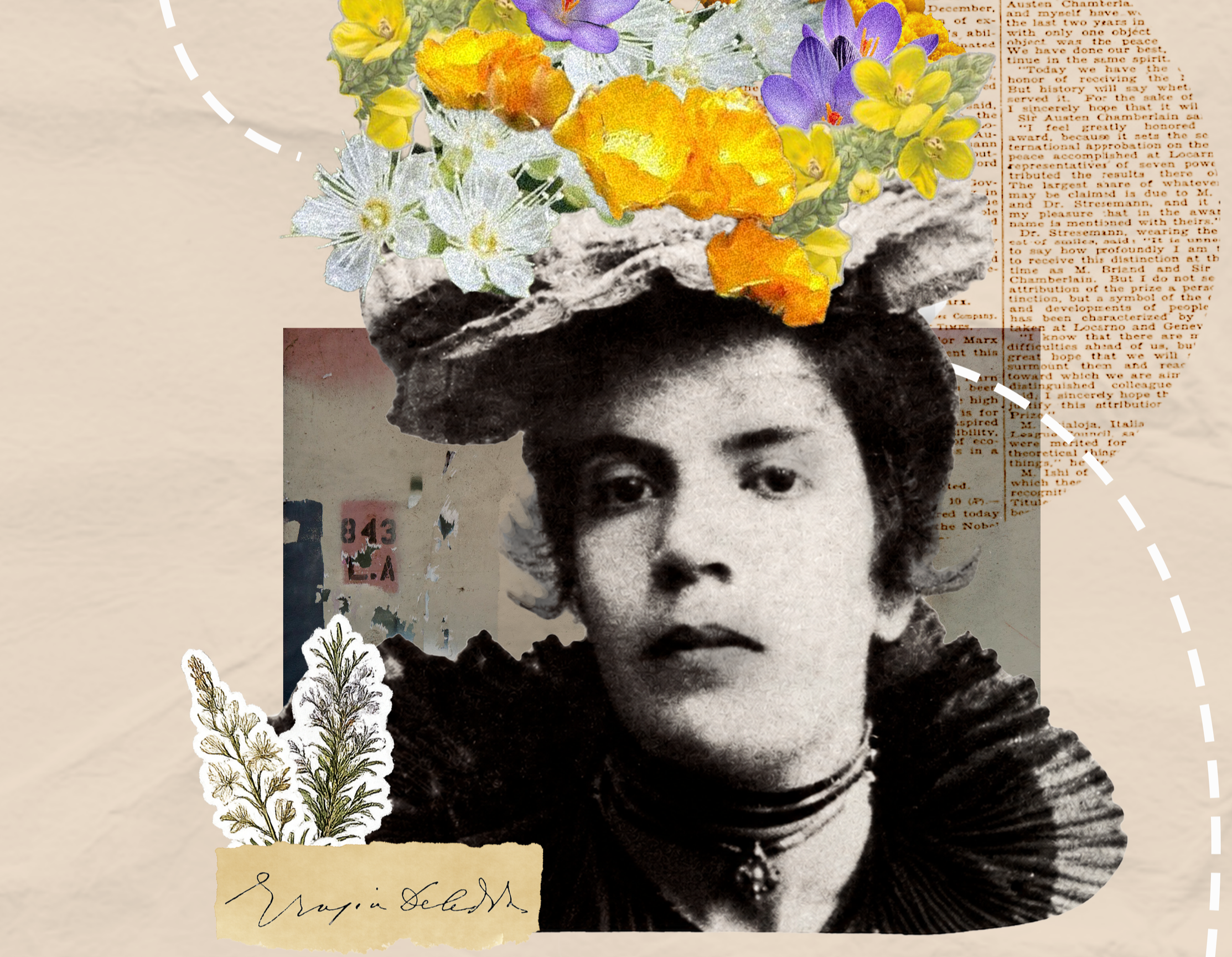
for her idealistically inspired writings which with plastic clarity picture the life on her native island and with depth and sympathy deal with human problems in general
On the centenary of Grazia Deledda’s Nobel Prize, the project approaches the writer as a presence still capable of questioning the present. Her work becomes a point of departure for new writing, translations, readings, performative actions, territorial relationships, and international connections. Desire, destiny, guilt, freedom, belonging, marginality, power, the condition of women, and the relationship between the individual and the collective: Deledda’s themes return as an open question.
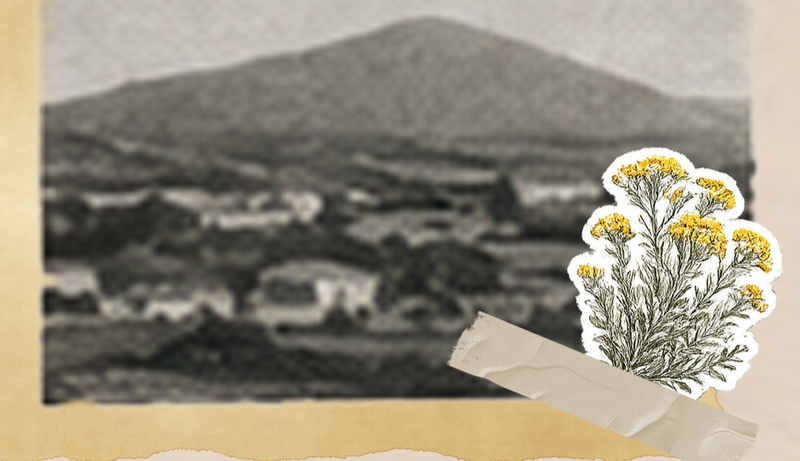
Sardinia is the first body of the project: land, language, memory, landscape; a space crossed by social, spiritual, political, and cultural tensions. Rebeccu, the medieval village that will become the project’s center of work for two months, will be a place of residency, listening, encounter, and creation. From there the project will extend to the partner institutions: in addition to the Municipality of Bonorva, it will involve the municipalities of Ittireddu, Giave, Borutta, and Cheremule, engaging libraries, residents, migrants, artists, scholars, and different audiences. The project develops along three lines that are not always separate from one another. The first is literary and scholarly, connected to the study of Deledda’s work, its contemporary rereading, and its local and international dissemination. The second is performative and dramaturgical: Deledda is explored through residencies, workshops, readings, writing, music, cinema, performance, and translation. The third is communal and territorial: the project takes root in the stages and communities it encounters, turning reading, voice, cooking, memory, and storytelling into instruments of universal participation.
Grazia ritrovata lives within the project’s female universe, beginning with the desire to open a dialogue with native and immigrant communities, with the Sardinian diaspora, with those who inhabit these places and those who carry them within themselves from afar. The aim is to open the discussion within a global context, through the universality of the themes addressed in Deledda’s literature and through the distinctive features of the author herself. From this point, the project seeks to recognize, through encounter itself, a global dialogue that—also by playing on the many meanings of the word “Grazia,” or “grace” - offers an opportunity to consider a possible universal form of unity, repair, listening, future, and peace.
In this direction, the journey will then move from Sardinia to New York, in conjunction with the anniversary of the Nobel Prize, through collaboration with the Martin E. Segal Theatre Center / CUNY and New York University. The work developed in Sardinia will become a platform for international exchange, open to the global community and able to bring together scholars, writers, and experts.
The process will be accompanied by an Advisory Board made up of figures from literature, translation, theater, cinema, academia, and cultural policy:
· Stefano Albertini, professor of literature and cinema and director of Casa Italiana Zerilli-Marimò at NYU;
· Patrizia Asproni, cultural manager and expert in cultural heritage and cultural enterprise;
· Marcello Fois, internationally renowned Sardinian writer and author of Quasi Grazia;
· Frank Hentschker, director of the Martin E. Segal Theatre Center;
· Giancarlo Lombardi, professor of Comparative Literature at the CUNY Graduate Center;
· Dino Manca, philologist and scholar of Italian and Sardinian literature;
· Marisa Ostolani, journalist and cultural promoter connected to Deledda’s memory in Cervia;
· Sonita Sarker, scholar of literature, feminist studies, and postcolonial studies;
· Sanaz Toossi, playwright, screenwriter and 2023 Pulitzer Prize winner (Drama);
· Martha Witt, English-language translator of Deledda for Italica Press.
The Sardinian journey
The Sardinian part of Grazia ritrovata will unfold between September and November 2026 as a distributed process of residencies, workshops, public conversations, readings, translations, music, food, ritual practices, and public sharings.
Over the course of these two months, the project will bring together a temporary and heterogeneous community in which visual art and design, comparative studies, translation, performing arts, curatorship, writing, and territories will meet within a network of presences that will be gradually defined. The process will be accompanied by tutoring and documentation activities designed to follow the artists’ work, preserve the traces of the processes activated, and build an archive of materials, testimonies, images, sounds, and reflections.
Rebeccu will be the symbolic and operational center. From Rebeccu, the project will open out to a broader territory, involving at least five municipalities in the Meilogu and Logudoro regions and their communities.
Echoes
The first movement will be entrusted to Ischeliu (Echoes), the residency program dedicated to Sardinian artists who have emigrated or are descendants of emigrants. Supported by Fondazione di Sardegna and now in its fifth edition, Ischeliu this year becomes the threshold through which the dialogue with Grazia Deledda begins. The question opening the project is both simple and profound: what remains, changes, or returns of Sardinian identity when it is lived through distance, diaspora, family inheritance, or a form of belonging that is no longer linear?
The residency will bring together Maria Luisa Usai, performer, author, and director of multidisciplinary projects, and Alessandro Olla, sound artist and professor of electronic music. Two Sardinian artists who have emigrated will accompany a group of ten resident artists, in a process devoted to call and return, distance, memory, the relationship with nature, and the possibility of poetically reinhabiting one’s roots.
The research will weave together voice, writing, live electronics, moving images, and soundscape, building a dialogue with the territory understood as a living body. The wind—a central element in Deledda’s imagination and in the artistic proposal—will pass through the work as both a natural and symbolic force: it calls, separates, presses, resists, and transforms.
The residency will activate performative, sonic, visual, narrative, and relational devices able to move across the territory: Rebeccu, the landscapes of the Meilogu and Logudoro, natural paths, places of memory, ancestral stones, still-secret places of worship, and the archaeological jewels of the area, including the Domus de Janas, recognized by UNESCO as World Heritage in 2025.
From diaspora to resident community
After the opening residency, the project begins its work with the territory: native and migrant residents, cultural workers, readers, and people interested in following the development of Grazia ritrovata from within.
Participation will be organized in two ways. A first group will be selected through an open call and will involve approximately ten local residents, chosen from both the native and immigrant communities, who will be available to follow the entire process and possibly continue into later phases. Alongside this stable core, a more open form of participation, will be available to those who wish to take part in individual workshops.
Each workshop will include a public sharing that will accompany the process, making the stages of the work visible and allowing participants and residents to gradually recognize themselves within the journey.
The first appointment will be Narrative Exercises in Attention, a workshop curated by Maria Luisa Mura (September 12 and 13, 2026). Born and raised in Sardinia, Mura holds a Ph.D. in literary geography, with an action-research dissertation on the relationships between nature writing and territorial refoundation in Sardinian and Provençal contexts. Her work focuses on literary landscapes, the geography and ecology of literature, and the relationships between text and landscape, space and narrative.
With Narrative Exercises in Attention, Deledda will be read through landscape, fairy tale, orality, memory, and visual imagination. The page will become a space to inhabit: paths, trees, houses, thresholds, images, and memories will become the starting point for building inner maps and shared stories.
During the same days, a reflection dedicated to women’s presence in the contemporary artistic landscape will also take shape. Warp and Weft: Literature, Art, and Design in Sardinian Female Genealogies will be a seminar devoted to retracing a line of thought, creation, and vision that runs through the cultural history of the island. Grazia Deledda, Edina Altara, Maria Lai, and the Coroneo sisters are only some of the many Sardinian women who transformed roots, memory, word, sign, and matter into imaginaries open to the world; they will be placed in dialogue as presences within the same constellation.
Voice, chorus, sound
After the September section dedicated to diaspora, territorial memory, and female genealogies across literature, art, and design, Grazia ritrovata enters a phase centered on the importance of voice: individual and collective expression, sound, relationship, and the construction of a shared listening.
On October 1, 2, and 3, 2026, the third workshop stage will take place—one of the central steps in the community project: I Found Myself. A Choral Action on Darkness and Grace—from Dante to Deledda through the figure of Pia de’ Tolomei.
This theater workshop will be curated by Teatro delle Albe and led by Ermanna Montanari and Marco Martinelli, founding figures of the company and internationally recognized artists: Montanari for her research on voice and scenic art, Martinelli for directing, dramaturgical writing, and choral community actions developed in Europe and in many countries across all continents.
The forest, disorientation, the fear of losing oneself, and the possibility of glimpsing a way out will become living material for work on the body, the voice, and the chorus.
The encounter with Pia de’ Tolomei, the brief and unforgettable female figure from the Divine Comedy, will open an impossible dialogue with Grazia Ritrovata. Pia entrusts Dante with an essential request: to be remembered. From this request emerges our bridge to Grazia Deledda: the only Italian woman awarded the Nobel Prize in Literature and yet, one hundred years after that recognition, still never sufficiently read, often absent from school curricula, and marginalized within contemporary cultural discourse.
The chorus will become the device through which this memory request is transformed into a collective experience: from Pia’s voice, asking not to be forgotten, through Dante’s verses, to Grazia’s words, rediscovered in the present as a revolutionary and universal voice.
The workshop process will conclude with a public scenic action at the Cheremule Parco dei Petroglifi, one of the UNESCO World Heritage sites in the area.
During the same days, two important figures from the contemporary Sardinian music scene will be guests in Rebeccu: Daniela Pes, whose vocal research opens a dialogue among language, sound, roots, and experimentation; and Gavino Murgia, whose work moves across jazz, improvisation, archaic singing, and Sardinian tradition.
Their presence will bring into the process a reflection on sound as deep memory, on breath as an originary gesture, and on the voice as a relational space among individual, group, landscape, and ritual.
On October 2, Gavino Murgia’s concert at the Domus de Janas of Sant’Andrea Priu will bring this research into one of the most memory-laden places in the territory, where sound, body, stone, and time may enter into resonance.
Reading Deledda with the community
Beginning on October 12, 2026, the project will enter a phase dedicated to the shared and choral reading of Deledda’s work, in collaboration with the libraries of the partner municipalities as places of proximity, cultural participation, and encounter.
The reading workshops will open the process to a more direct involvement of the territories, inviting residents, readers, and participants to enter Deledda’s work through interactive, narrative, and imaginative devices. In this phase, reading will become an active and shared experience, able to strengthen the relationship between the project and the local communities.
The first workshop will be created with the Jane Austen Sardegna Association and curated by Giuditta Sireus.
Abitare Grazia (Inhabiting Grazia) will begin from Cosima, Deledda’s literary testament, and guide participants through a symbolic exploration of the author’s house, understood as a biographical, literary, and inner space. Through reading, biography, and imagination, the workshop will invite participants to inhabit Deledda’s narrative places, transforming the house into an affective and identity-based map.
Writing, translating, rewriting
From October 19, 2026, Grazia ritrovata will start a path devoted to creative writing and to questions related to different forms of translation.
On October 19, at the Bonorva Public Library, a meeting with Martha Witt, English-language translator of Grazia Deledda for Italica Press, will be dedicated to The Mother, her English translation of La madre. This will be an opportunity to reflect on the movement of Deledda’s work from one language to another, on its reception in the English-speaking world, and on the capacity of her writing to speak to international audiences.
Between October 19 and 23, Martha Witt will lead a pair of creative writing workshops designed to engage participants with Deledda’s themes and transform them into contemporary narratives. Her experience as a translator and writer will guide the group in exploring how a literary legacy can generate new voices, new images, and new stories.
This phase prepares the next step of the project: the possibility of transforming the reading of Deledda into new writing, allowing different idioms, memories, biographies, and sensibilities to emerge.
One of the aims of Grazia ritrovata is also to invite the group involved to reread Deledda through its own language and experience. The presence of native residents and immigrants is therefore essential: it brings into the work different languages, belongings, memories, and ways of inhabiting the territory, and it also brings back the ancient idiom that was the writer’s mother tongue.
Translation, from a literary act, becomes cultural, social, and human. It crosses languages and, at the same time, what often remains difficult to name: feelings, senses, nostalgia, guilt, desire, call and return, belonging, distance.
In dialogue with Deledda, translating means searching for new words for ancient experiences, observing what happens when a story passes through different bodies, idioms, generations, and geographies.
Between October 22 and 24, The Remembering Body: A Community Dance Workshop on Female Memory, Distance, and Belonging, led by professional dancer Francesca Schipani, will open onto Grazia Deledda’s universe, inviting participants to explore the body as a place of memory, roots, and separation: a space in which silences, distances, and forms of belonging can become shared gesture.
On October 28 and 29, the final appointment in this path, Grazia in My Own Words, a workshop led by playwright Nalini Vidoolah Mootoosamy, Italian playwright of Mauritian origin. She will offer participants the possibility of transforming the reading of Deledda into new writing, bringing forth different idioms, memories, biographies, and sensibilities.
During the same days, the presence of Sonita Sarker will accompany the project toward a broader reflection on the reach of Deledda’s themes and their connection with contemporary women’s literature. A scholar of literature, feminist studies, and postcolonial studies at Macalester College, Sarker has offered a reading of Deledda that places island and continent, belonging and distance, local history and global horizon in relation. Within the project, she will bring this critical perspective into the work with Nalini, helping the group recognize Deledda’s writing as a space in which to question identity, gender, migration, memory, and community.
Her contribution will help situate Deledda within a broader perspective, strengthening what was expressed in the Nobel motivation and highlighting the “high ideal” with which the writer, “with clear plasticity,” depicts the life of her native island and, with depth and empathy, addresses problems of general human interest.
Deledda rituals: the Bread and Onnisanti Dinner
Between October 23 and November 2, Grazia ritrovata will enter its most intense phase: the public sharing of the research project, coinciding with the days dedicated to the rituals of “Onnisanti” (All Saints) and blending into a rich program of performances, concerts, and book presentations. Food and language, both deeply present in Grazia Deledda’s work, will be our key to opening the project to a sensitive, collective, and contemporary dimension.
Food is a shared language, a memory of the senses, a communal act, and an art. Recipes, bread, the table, domestic cooking, and preparation are tools for reading Deledda through what is transmitted in literature as atmosphere.
Preparing, kneading, cooking, offering, and sharing will become acts of storytelling, revealing family memories, forms of belonging, absences, inherited knowledge, and forms of care.
This section will also include installations of the Tables Set for the Dead and the Exhibition of Ritual Bread curated by Tonino Serra. Bread and tables will become symbolic places where Deledda’s literature encounters deep Sardinian rituals: the home, food, ancestors, gift, absence, and the continuity of community.
It is here that the Sardinian part of the project will conclude on the night of October 31. With Contos a Sa Luna, the community will gather around the Sacred Well of Su Lumarzu to read, listen, tell stories, and remember. This community will be made up of those born in the territory, those who inhabit it having arrived from elsewhere, those who belong to the diaspora, and those who choose to take part in a dialogue: a community gathered in the name of Grazia.
The New York presentation
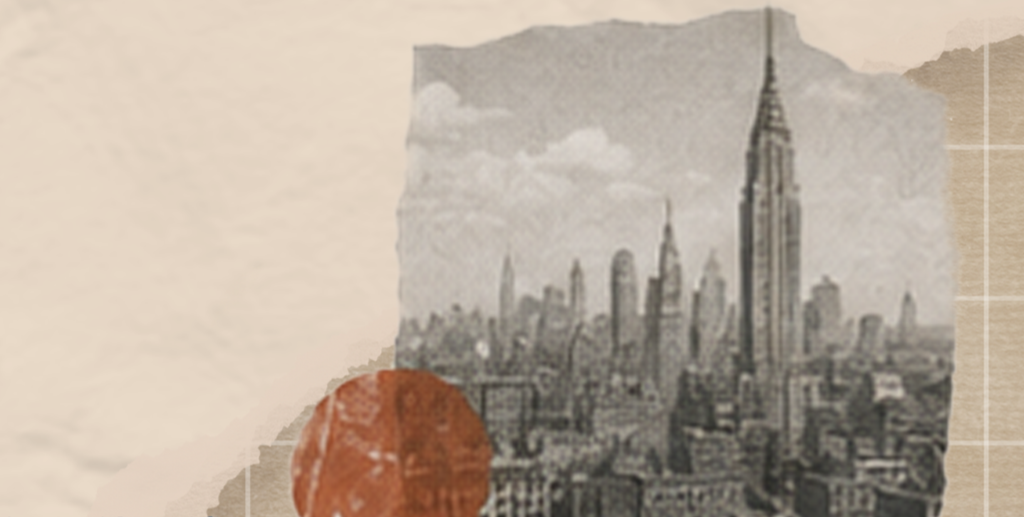
Between December 9 and 12, Grazia ritrovata will arrive in New York for two or three days of celebrations, public conversations, screenings, and presentations.
These days will make it possible to explore a broad horizon in which the revolutionary figure of Grazia Deledda will be set in motion again through theater, cinema, translation, gender studies, comparative literature, new dramaturgies, and the relationship between women’s writing, belonging, marginality, and public recognition.
Symposium
Martin E. Segal Theatre Center / CUNY Graduate Center
On December 10, the Martin E. Segal Theatre Center at the CUNY Graduate Center will host the international symposium Grazia Ritrovata, presented by the Ph.D. Program in Comparative Literature / Italian Specialization at the CUNY Graduate Center, 369gradi, and the Segal Theatre Center. The day will be coordinated by Giancarlo Lombardi, professor of Comparative Literature at the CUNY Graduate Center and a key figure in Italian and comparative studies; Valeria Orani, creator and curator of the project; Frank Hentschker, director of the Segal Theatre Center; and journalist Donatella Mulvoni, conference coordinator for the day.
The program aims to offer an authoritative reflection on Grazia Deledda as a radical figure of women’s emancipation in literature and on the impact of her work in the global context. The day will expand the reading of Deledda beyond a strictly literary framework, crossing theater, cinema, translation, gender studies, comparative literature, new dramaturgies, and community practices.
Alongside academic and critical contributions, the symposium will present the process developed in Sardinia, giving space to the figures who actively accompanied the journey on the island and who have already confirmed their presence for this final international academic event: Dino Manca, (University of Sassari), one of the leading scholars of Grazia Deledda; Martha Witt, Deledda’s English-language translator for Italica Press and leader of the creative writing workshops; Sonita Sarker, scholar of literature, feminist studies, and postcolonial studies, whose presence is valuable for reflecting on the global reach of Deledda’s themes; and Nalini Vidoolah Mootoosamy, the project’s resident playwright, invited to work on the rewriting of Deledda through plural voices, languages, and imaginaries.
The symposium will conclude with a discussion and reading built around dramaturgical trajectories inspired by the life and writing of Grazia Deledda, including the translation of an excerpt from Solo Grazia by Marcello Fois and a presentation of fragments, readings, and voices gathered by Nalini Vidoolah Mootoosamy during her Sardinian experience.
Screening Quasi Grazia
On December 11, day of the anniversary of the awarding of the Nobel Prize to Grazia Deledda, the project will continue in collaboration with Casa Italiana Zerilli-Marimò / New York University with a screening of the film Quasi Grazia, directed by Peter Marcias.
The screening will be dedicated to the relationship between Deledda, cinema, theater, and literary memory. Based on the work by Marcello Fois, the film will allow audiences to approach the writer from another perspective: that of image, filmic scene, and biographical reconstruction as an act of contemporary rereading.
The screening will be followed by a panel Q&A with one of the female main characters of the movie, the director Peter Marcias, Prof. Dino Manca, an expert in Deledda studies and scientific consultant for the making of the film.